Monday, March 20, 2006

Watching Where Water Goes: The Tao of Strategy

Water is as soft as anything on earth
yet mountains and canyons have been sculpted by its force

Thus the soft overcomes the hard,
the yielding overpowers the rigid
Though a fact of nature,
this truth is difficult to put into day-to-day practice


Tao, 70


Through a tangled rainforest we emerge, past a driftwood gate onto a sweeping pebble beach. It feels like being born, out of the darkness of winter and into the full light of spring. The ocean is radiant, and I think of Bruce Cockburn’s song: all the diamonds in this world, that mean anything to me, are conjured up by wind and sunlight, sparkling on the sea.

This place isn’t marked on the winding road that snakes its way up the west coast from Victoria as far as Bamfield, so there are only a few other people combing the dazzling shore. The ecstasy of arriving here is nearly overwhelming. The sun is so bright, after two and a half months of dreary cloud and rain, that I feel stunned by it. The children run down dunes of pebbles washed into great mounds by recent storms. The adults find a place to lay out a picnic. Driftwood is collected and we build a small fire, not so much for warmth, though it is still chilly, but for ceremony. Cans of beer are opened. Food is shared. It is the middle of February and the back of a west coast winter is being broken. We can feel it.

Down the beach, to the south, we can make out a waterfall. In small groups we meander that way, walking along the waterline where there is sand, finding the shells of Dungeness crabs washed up from a watery grave. In places the pebble mounds are taller than we are, and have been carved into terraces. Two weeks ago there was a tremendous storm that shut down ferry traffic, stranding commuters in their cars at the ferry terminals. That storm and others like it over the winter sculpted this pebble beach as an artisan would mould clay. Rio finds a rocky terrace and runs to its lip and leaps off, laughing and falling and rolling down the rocky anticline.

We reach the end of the beach where twin falls tumble over a ledge of sandstone. The falls are fifteen feet high – much larger than we had guessed from a distance – and have carved this pliable stone with their near constant pounding.

Above the falls is forest, and beyond that, the highway. Perched next to the creek, with a charming view of the falls is a small, neatly kept cabin. I fantasise about retreating to this place, with a view of the Straight of Juan de Fuca, and the Olympic Peninsula beyond, and the falls at my feet, to write for weeks at a time.

Where the water plunges onto the beach it doesn’t rush to the ocean. It simply disappears. The mounds of storm pushed stones suck up the stream completely. As this is the first time I’ve visited this stretch of coast I don’t know how winter’s storms have changed it, but I imagine that maybe by the summer the water will have carved a path along the surface to the ocean, but for the time being, the water goes underground and makes its way to the sea unseen. A few feet above the tide line the water re-emerges and heeds gravities final, undeniable calling.

Since that day on the beach a month ago, I’ve thought a lot about those falls, and water’s path across the face of the earth.

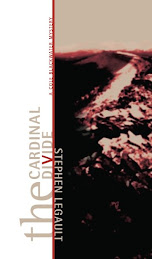
I was thinking about it when I was talking with Hinton, Alberta based activist Connie Bresnahan about a story I’m penning for Alberta Views Magazine about a sea change in that province’s environmental community. Connie was telling me about how the Athabasca Bioregional Society quietly backed off from open environmental advocacy work for a couple of years after the contentious Cheviot Mine Hearing. After a decade of acrimonious debate and legal challenges over the Cheviot Coal mine – to be dug within view of the Cardinal Divide just east of Jasper National Park – she and others in the group realized that despite having lived in the region for decades, they were considered outsiders.

They determined to change their relationship with their community. They dropped everything else and focused instead on a small, community based creek restoration project. They forged relationships, based on common goals, with community and government organizations, local businesses, Town Council, industry, and interested public volunteers. For three years they worked to establish trust, respect, and open communication between themselves, members of the creek restoration project partnership, and fellow community members. The project they initiated – restoring Hardisty Creek – helped bridge the gap between local conservationists and a public distrustful of the environmental community.

They worked on fish passage issues, education about watershed health and building bridges with those who in the past had been their adversaries. West Fraser Mills Inc., (formerly Weldwood of Canada), one of the largest forest products producers in the region recently invested $200,000 in the restoration project, and CN Rail $115,000 to improve the railway crossing of Hardisty Creek.

What Bresnahan and fellow activists are saying with their work is “We’re here for the long term. We’re here forever.”


Softness overcomes hard
like a canyon wall slowly yielding to water


Tao, 43


Faced with anger, rage, and hatred because of their opposition to the Cheviot Coal Mine, The Athabasca Bioregional Society took a lesson from water’s ways. Now, says Bresnahan, the Society is ready to test that trust as it tackles more complicated, divisive issues once again.

This is what Allan Watts called the Watercourse Way of water in his book about the Tao. There is an obstacle in your path. Go around. Go over. Go under. Flow. Pool and back up, and seek out the way that offers the least resistance. Persevere. Have patience. Trust. Gravities call is loud, and strong, and enduring. You will find a way.


When turmoil swirls around you
be as the stone in the river’s flow
Allow the waters to come and go,
come and go

Be still
Wait for the right moment to act

Tao, 16


(As a post script this, my family and I returned to this beach on March 19 to spend the day with friends. We visited the falls again, and found that one of the channels had been nearly completely cut through to the sea. The smaller rocks washed away, and the larger rocks fell into the currents flow, and are slowly being pushed aside and out to the ocean. I learn so much every moment I spend by water’s edge.)


(Photo: Ed Wiebe)

Thursday, March 09, 2006

First Reading of Carry Tiger to Mountain: Leadership and Social Venture

Last night I did my first reading from Carry Tiger to Mountain. Because the book won’t be out for a few months yet, it wasn’t really from the book, but from pages compiled from the various drafts of the manuscript. I was invited to talk with a small, interested group of senior business people in Victoria – many of whom are making mid-career course corrections – who meet on a regular basis to explore the topic of leadership, and support each other as they work to find meaningful ways to match their passion and skills with business ventures.

We started the gathering with a question: “What is your greatest challenge and your greatest opportunity as a leader?”

Some of the answers were:

* Finding a place to apply my skills

* Choosing to say no

* Finding a way to give as much into the community as I can

* Find a way to be most myself

* Discover a way to not be a mile wide and an inch deep

After this introduction, I read a conglomerate of stories, primarily focused on the Tao te Ching’s principle tenets of leadership: stepping aside, trusting and acting with conviction. Ultimately these three come together to form a common theme: that leadership is about service, to our cause, to our communities, and to those we lead.

Verse 17 of the Tao says:

The mark of a good leader
is that his colleagues do not require his attention
Next best is a leader who is loved
After that, one who is feared
And worst of all, one who is hated

Trust that the people you work with
are able and worthy of your confidence
and they will exceed your expectations

Lead by example
Do your work and be humble about your accomplishments
When you have finished, and your colleagues say
“Look at what we accomplished all by ourselves”
Then you will be a leader

One of the parts of the readings that seemed to resonate with these leaders was the story of Mark Deutschmann, the founder of Village Real Estate, of Nashville Tennessee. I met Mark at the Social Venture Institute at Hollyhock, and we spoke over the phone in December when I was putting the finishing touches on Carry Tiger to Mountain. Deutshmann’s company -- part of his own mid-course correction that steered his career more closely into alignment with his values -- is part of a community based approach to reviving Nashville’s once hollow city centre.

Long interested in how business could contribute to bettering society, Deutschmann has been associated with the Social Venture Network (SVN) for many years, and found himself asking “What am I going to do with my life to make a difference in the world?”

He decided that existing businesses needed to shift the way that they operated if they were going to create positive change, so in October of 1996 Village Real Estate was born, founded on the idea that the real estate transition – the act of buying a selling homes – could be used to create community.

The first thing Deutschmann did was place a portion of the company into the Village Fund, to be managed by the Tides Foundation – a San Francisco based philanthropic organization that helps individuals and companies manage charitable giving. The Village Fund would be used to support what Deutschmann calls “social profit” organizations – charities and what we often refer to as non-profit organizations – that were doing good work to build community in Nashville. As Village Real Estate’s profitability grew, the Village Fund started to support organizations working to clean up toxic waste in Nashville, and preserve greenways along the Cumberland River.

Nashville’s urban communities were in transition at that time, and they needed support, says Deutschmann. “Essentially, there was no residential living downtown,” he says. In fact, Nashville prohibited residential development there. “We had a city that was sprawling endlessly, but we weren’t taking care of our core. This is where my strategy as a real estate broker started to change.”

First, Nashville City Council was convinced to lift the ban on developing residential in the down-town core, and started planning for mixed-use of the city’s centre. The Civic Design Centre, which Deutschmann serves as a board member, was founded to develop the Plan of Nashville, the first effort to consider the central city in its entirety, develop a community-based vision, and identify design principles. Village Real Estate positioned itself to sell mixed-use multi-purpose redevelopments, and to manage new developments in downtown Nashville.

Today, Village Real Estate involves itself in project development and marketing in dozens of downtown infill projects, and adaptive re-use of existing structures. And he says that now the company is of a size that it can put more money into the Village Fund, giving away more than $100,000 to community organizations in 2004.

Next, he says, Village Real Estate will work to get everybody in urban Nashville to make the switch to green power through the Tennessee Valley Authority, which consumers can do through Village Real Estate’s web site. He says that many, though not all, of his more than 100 real estate agents are attracted to Village because of the company’s values.

What does the story of Village Real Estate have to do with the Tao te Ching? Deutschmann’s story comes from the chapter of Carry Tiger to Mountain that focuses on moving through challenge and change. Lao Tzu councils:


All living things are soft and flexible
all things in death are hard and brittle

The hard and the brittle will be broken
the soft and flexible will endure


(Tao, 76)

Village Real Estate was the result of flexible thinking. It recognized an opportunity to align a leader’s vision for his community with a business opportunity. The result has been a powerful success. In time, rocks, and even mountains succumb to the enduring power of the softest substance on earth: water. We can emulate that soft power in our work as leaders in nearly everything we do.

Friday, March 03, 2006

An Ad Campaign that Absolves via Visa

I was sitting on the subway in Toronto when I first saw it. The words global warming caught my eye. The ad featured a coffee table with a book whose title read How to Keep Your Cool While Chairing a Summit to End Global Warming.

My first thought was, “Wow, that was a fast turn around,” believing that somehow the Hon. Stéphane Dion, Canada’s former federal Minister of the Environment, and a pretty cool dude, had penned a treatise on his very recent experience chairing the climate conference – COP 11 - in Montreal last December.

Then I read the subtitle: Insights into meeting with captains of industry, government big-wigs, and environmental gurus to find long-term solutions to end climate change. Hmmm … didn’t seem like the Hon. Minister to me.

And then the kicker: If you want an easier way to fight global warming, donate to us. With your funding WWF-Canada can do things that you wish you could. The ad directed people to visit saveourclimate.ca to donate.

So when I got home that night I went to saveourclimate.ca, and contacted WWF to request PDF’s of their ad. (They are on the web page…) I had learned from a colleague that this particular ad was part of a series of radio, TV, and print ads that were airing in Toronto. (The second book was bathroom reading: 2352 Easy Ways to Make Fossil Fuels Extinct.)

The goal of the campaign is to raise $200,000 for WWF to use to combat global warming, with a particular focus on Canada’s north.

To say that the ad miffed me would be an understatement. The message that oozes from the ad is that the average citizen 1) isn’t clever enough to understand the complexities of global warming and its solutions, 2) isn’t motivated or interested enough to take action, and 3) they don’t need to anyway, because WWF can do it all for them. So hand over your money, and go about your lives, citizens. The Panda is on the job.

Now before I go any further, I want to say three things: First, when you visit www.saveourclimate.ca, the message found on the billboards isn’t reiterated. In fact, it’s a reasonably good, interactive website. There are things for people to do there other than donate. There are some tips for conserving energy. You can sign on online petition. There is a letter that can be printed and mailed to your Member of Parliament. In my book, the site gets 7 out of 10 for creativity, and 5 out of 10 for engagement. Not Bad.

Secondly, I don’t dispute WWF, or any other organization’s need or right to raise money to do its good work. When I was an executive director, I had to raise about $1,500 a day, every day, to pay for the operations of a very small national conservation group.

Thirdly, I’m not anti World Wildlife Fund. Not specifically. They do good work. In the late 1990’s I worked to protect areas in Alberta with WWF’s provincial rep, Peter Lee, one of the most effective advocates for nature in that province. Today they are focused on a couple of key issues – the Mackenzie Valley pipeline and global warming, to name two. Very important issues to which they contribute significantly.

But these ads are not a significant contribution. They are a set back. They roll the clock back a good, long way in how Canadian and North American conservation organization’s work with and engage the public.

These ads say, “We don’t need you. We’re so big and smart and connected and influential and effective that all we need is your money and we’ll solve these problems all by ourselves.”

I hope this is not what the good people at WWF really think. I hope that this is a case where the fundraising staff, and the advertising firm, got way out in front of the thinking at the organization, and that they now need to be reined in. Fast.

For the last twenty years the environmental movement has accelerated its professionalization. We’ve hired staff, created a brand for our organizations, started sophisticated marketing and fundraising campaigns, and in doing so put miles between ourselves and the mom and pop operations – the kitchen table activities – that gave us the first Earth Day in 1970, the Clean Air and Water Acts, and the Endangered Species Act in the US, and Canada’s marvellous National Parks system in Canada.

But to keep pace with the threats that we face – loss of biodiversity, the extinction of species, the impact of global warming – we’ve had to professionalize. The scale of the problem demands that we have people able to wake up every morning thinking about solutions. In 1996 I took my first paying job as an activist and I’ve never looked back.

But somewhere along the path to professionalization, we’ve forgotten that our real power as a movement is with people. People in communities. People who see the impact of climate change as shorelines erode, or as animal migration changes and habitat disappears. People who can taste the air. People who feel the assault on their bodies from toxic waste and who fear for their children’s future as smog pollutes their lungs.

We’ve forgotten that power is only useful when it is disseminated, when it is dispersed. When it is given away.

When an organization grows and gains power
it should become like the ocean
so that all streams will run downhill to it
The larger the organization grows
the lower it should stoop in humility

Lao Tzu, Tao te Ching, 61
In Carry Tiger to Mountain

If we’re going to effectively combat the impact of global warming, then we’re going to need people to feel empowered, not powerless. We’re going to need to turn to communities – to tens of thousands of communities – and learn from them what needs to be done to dramatically reduce our dependence on fossil fuels, and then help them implement their ideas. And we’re going to have to learn to trust them.

We’ve got to understand by now that ameliorating the impact of climate change isn’t going to be accomplished by screwing in what my colleague Marc Stoiber calls “squirrelly light bulbs.” It’s going to take a sea change in our thinking, in our action, and in how we make decisions as a society. To do that, we’re going to need everybody working as advocates, not just WWF.

Organizations like WWF, and other large, national brands, have an important role to play in that effort. We need to empower our grassroots community activists. There ad says that people can go about their lives, drive their SUVs, buy their plasma TVs, so long as they donate twenty bucks to WWF. Visa card absolution.

This is not the way to build a movement in Canada, and across North America, that can tackle global warming. But what is?

What do you think the environmental movement needs? I’d like to hear from you. I’ve also given WWF an opportunity to post their response to my thoughts here, which I very much hope they will do. And I’ll be posting further thoughts in the coming weeks. Stay tuned.